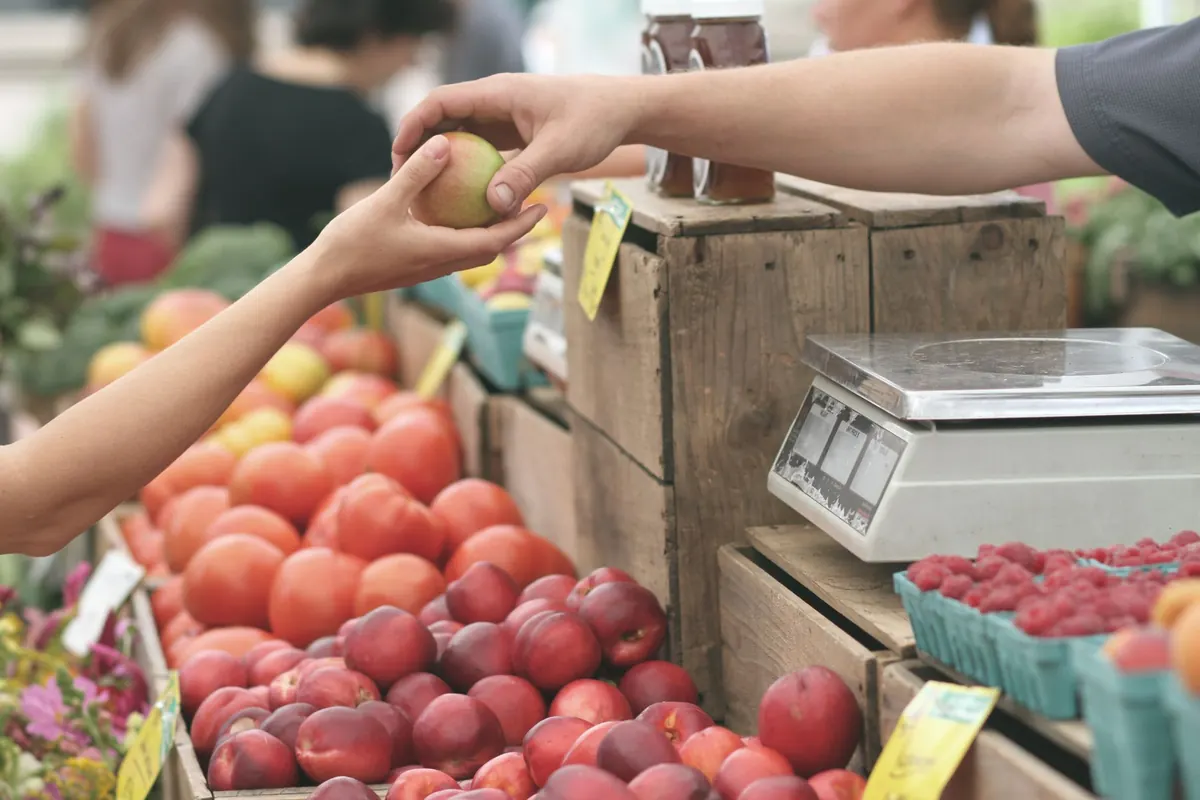
Saturday morning in the valley divides people into two habits. One half of the village is in the square by eight, basket on the arm, working the stalls before the good peaches go. The other half is at the shop on the corner at ten past eight, buying the same peaches from a crate that arrived at seven. Both will tell you, with some conviction, that theirs is the better arrangement.
There is no single winner. The weekly market and the permanent village shop do different jobs, and the households that eat best are usually the ones that use both without agonising over it. What follows is a plain comparison of the things that actually matter when you decide where to spend your grocery money: price, freshness, opening hours and selection.
Freshness is the market's strongest card, and it is not a marketing claim. Stallholders selling their own produce are usually picking to a schedule that ends hours before the stalls go up, not days. That shows in things you can check yourself: firm courgettes with the stalk still damp, lettuces that have not been trimmed to look neat, tomatoes that smell of tomato.
Selection follows the season rather than a planogram. In late July the choice is absurd — six kinds of bean, three colours of courgette, basil sold in bundles the size of a fist. In February the same stall is honest and narrow: roots, brassicas, stored apples, perhaps a few forced things under glass. That narrowness is information, not failure. It tells you what is worth buying that week.
Prices move too. At the height of a crop, market prices often drop below shop prices because there is simply too much of the stuff about. In the last half hour you can sometimes do better still, though the best of the stall will be gone. Come late only if you are flexible about what you cook.
Convenience is the obvious answer, but the useful version of it is narrower than that. The shop is open on the day you forgot, in the hour you actually have, and it does not require you to plan a week around a Tuesday.
Reliability matters as much as hours. A permanent shop carries the boring things that make a meal work: lemons, garlic, cream, a decent loaf, the one herb you are missing halfway through a recipe. Market stalls sell what they grow, which means nobody there will hand you a single lemon at six in the evening.
There is also a quiet advantage in the smaller shop's buying. Many village stores stock local lines — eggs from a farm up the road, cheese from a dairy a valley over, honey from somebody you have met — and they carry them every week rather than once. Ask the person behind the counter who grew the tomatoes. You will usually get a straight answer, and sometimes a name.
The fair comparison is not the price of one kilo of anything. It is the cost of the week's food, including what you throw away and what you spend getting there.
Compare like with like for a month, noting what you spend and what you end up binning. Most households find the difference is smaller than they assumed, and that it sits in a handful of items they buy every week.
Market hours are short and unforgiving. Stalls go up early and come down around midday, and the whole thing disappears for six days. Weather can wipe out a market day entirely. If you rely on it, you need a fallback for the week it rains sideways.
Village shops keep the other kind of hours: often a long morning, a lunchtime pause, and a reopening until early evening. That pause catches people out constantly. Check the door, then check it again after the holidays — closing days drift, and small shops are not always quick to announce a change.
A simple rule: use the shop for the days you cannot plan and the market for the days you can.
Depth is the market's speciality. If you want to make a proper passata, a stallholder will sell you a whole crate of the right tomato and tell you which one they use themselves. You will find varieties the shop cannot justify stocking: purple beans, bitter greens, fruit that does not travel well.
The shop offers breadth you can depend on. Its range is built to answer a whole recipe rather than one ingredient — oil, salt, flour, tinned things, a packet of pasta for the evening you cannot cook. Selection here is about being complete, and about special requests: many owners will order something in if you ask and do not mind waiting a few days.
Try this for a month, then adjust.
Neither option is more virtuous. The market gives you the best of the season at a fair price if you can get there; the shop keeps you fed on the Wednesday you come home late with nothing in the house. Between them they cover almost everything a kitchen needs. The trick is to stop expecting one to do the job of the other.
Photo: Erik Scheel / Pexels
Pricing by instinct, invisible signs and a cash-only tin cost new stallholders more than they realise. Practical...
A practical listening guide to the dialect phrases echoing around the valley's market stalls, with pronunciation...

A plain-spoken guide to the valley's monthly folk sessions: how the evening runs, what listeners should do, and how...

Local news and stories from the valley.
