The first time you walk out of the village and up past the last houses, the valley rearranges itself. Streets become mule tracks, the noise drops away, and the ridge you have been looking at from the square for years turns out to have a path along the top of it. It is a good feeling. It is also the moment when plenty of new walkers take a wrong turn, lose an hour, and come home convinced the trails are not for them.
They are. The marked network here is generous, and the easy end of it is genuinely easy. What follows is the sort of knowledge usually handed over a coffee rather than written down: which routes to start with, how the signage works, where your phone quietly gives up, and the habits that separate a pleasant afternoon from a long walk home in the dark.
The temptation is to aim for the high refuge on your first outing, because that is what everyone photographs. Resist it for a month. Early walks should be short enough that you come back with energy in reserve — that is how you build both fitness and the judgement to know when to turn around.
Look at two numbers on any route description, not one. Distance tells you half the story; ascent tells you the rest. A flat six kilometres along the valley floor is a stroll. Three kilometres climbing steadily to a hamlet on the slope will feel considerably longer. As a rough planning guide for a new walker, allow an hour for every three to four kilometres on gentle ground, and add about an hour for every three to four hundred metres of climbing, with stops on top of that.
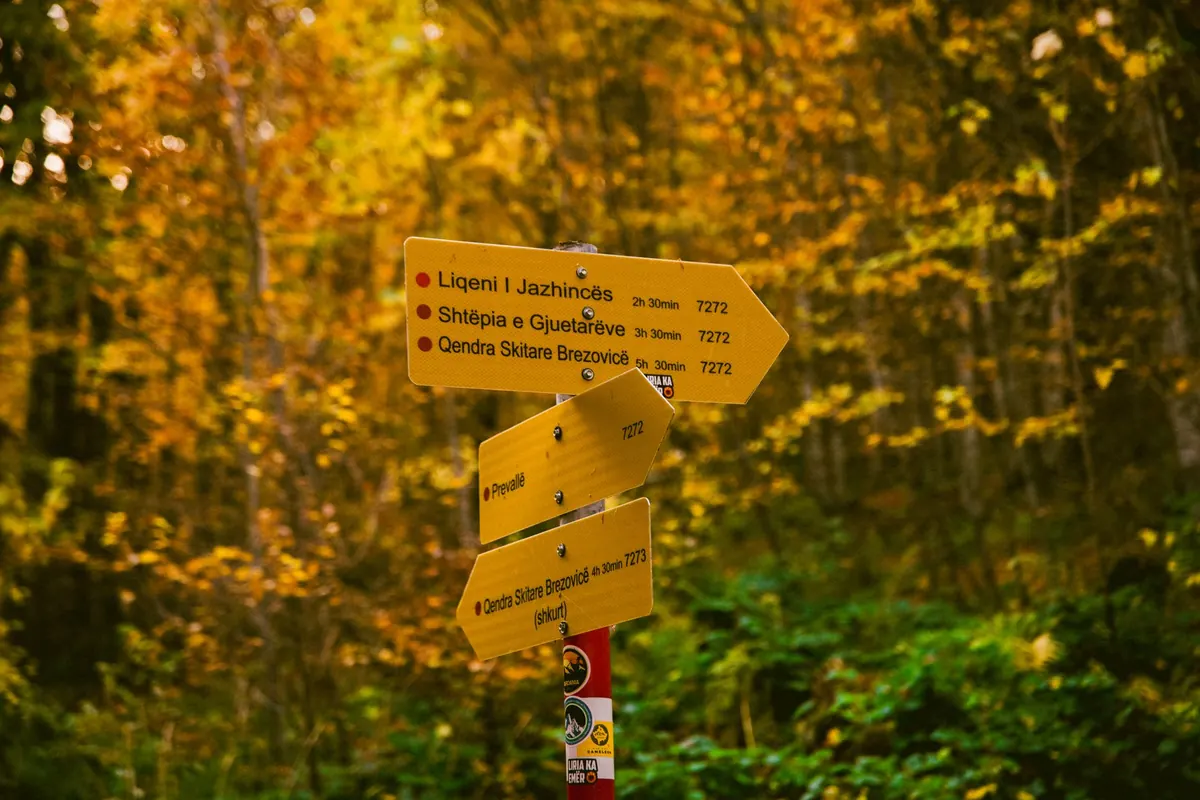
Most routes here use the same system you will find across the mountains: a painted mark of red and white on rocks, trees and posts, with route numbers or letters at junctions. The paint is the important part. Wooden signposts help, but they rot, fall over and occasionally get shifted. Blazes on stone are harder to argue with.
The habit worth building is this: at every junction, stop, find the next blaze with your eyes before you move, and only then walk on. Not while walking, not after a glance — stop. Most wrong turns happen where two paths look equally plausible and the walker picks the wider one.
In each case, go back to the last blaze you actually saw. It is rarely far — usually a couple of hundred metres — and it saves the twenty-minute argument with yourself about whether to push on.
Signpost times deserve a word too. They are calculated for a steady adult walking without long stops, who knows the way. If you are new to hills, add a third to whatever is printed and you will have a far more realistic picture of your afternoon.
Coverage is good in the villages and patchy the moment you leave them. The gaps are predictable: the shaded side of a ridge, the bottom of a wooded side valley, the stretch behind the big spur that blocks the mast. An hour without signal is normal and not an emergency. Assuming you will have one is how small problems grow.
Before leaving the house, download the offline map for the area and open it once so it caches properly. Photograph the signpost at the trailhead. Send someone your route and expected return time — a message saying "walking the lower ring, back by four, will text when I'm down" is worth more than any app. Battery is the other quiet failure: cold air and constant screen-checking drain a phone fast, so keep it in an inside pocket and carry a small power bank if you navigate with it. The European emergency number is 112; save it now, before you need it.
None of these need equipment or experience. They need a decision, made in advance, that you will actually do them.
For half a day on the lower trails you need little, but you need it every time. Water — more than feels sensible in summer. A warm layer and a light waterproof, because the weather on the upper slopes is not the weather in the square. A snack with some salt in it. A small torch, the item people laugh at until the first time they are late. A basic first-aid kit, a whistle, and a printed or photographed copy of the route.
On footwear: you do not need expensive boots, but you do need grip. Worn-flat trainers are the most common reason a short walk becomes a slow, careful shuffle over wet stone. If you are buying boots, wear them round the village for a week before taking them up a hill.
Start early. Summer afternoons build cloud over the ridge, and storms arrive faster than the view suggests. If the sky is closing in and the air has gone still, head down rather than pushing for the top. Spring means mud and loose stone on shaded sections; winter means ice on exactly the stretches that look harmless. In autumn, hunting takes place on and around the trails, so stay on marked paths, wear something visible and don't wander into the woods. Check the forecast the evening before and again at breakfast. If you have a heart condition, a breathing problem or are returning from injury, speak to a doctor before planning anything with real climbing in it.
Pick a valley-floor route or a short ring of no more than two hours. Open the map at home, find the trailhead, photograph the signpost. Tell someone where you are going and when you expect to be back. Carry water, a warm layer and a torch. At each junction, stop and find the next red-and-white blaze before moving. Turn around at the time you agreed, even if the summit looks close — it will still be there next month, and you will be fitter for it. Sign the book at the refuge if there is one, greet the people coming the other way, and note which path you want to try next. That is the whole method. The valley is full of walkers who began exactly this way; the only thing they did differently was go out again the following week.
Photo: Furkan Idrizi / Pexels

Pricing by instinct, invisible signs and a cash-only tin cost new stallholders more than they realise. Practical...

A practical comparison of the weekly market and the village shop — on price, freshness, opening hours and selection...

A practical listening guide to the dialect phrases echoing around the valley's market stalls, with pronunciation...

Local news and stories from the valley.
